Our field test: 6 moles caught in 48 hours with Putange traps
25 November 2026
Before selling a trap, we wanted to know whether it lived up to its promises somewhere other than on a product page. So one late July, we took an Elegardn kit of 10 Putange traps to a large country garden where the moles had made themselves at home: a churned-up lawn, a bank riddled with molehills, and an owner at the end of his tether.
The result fits in one line: at least six moles caught in two mornings, with no bait, no chemicals and no smoke bombs. Here is how it went, with photos.
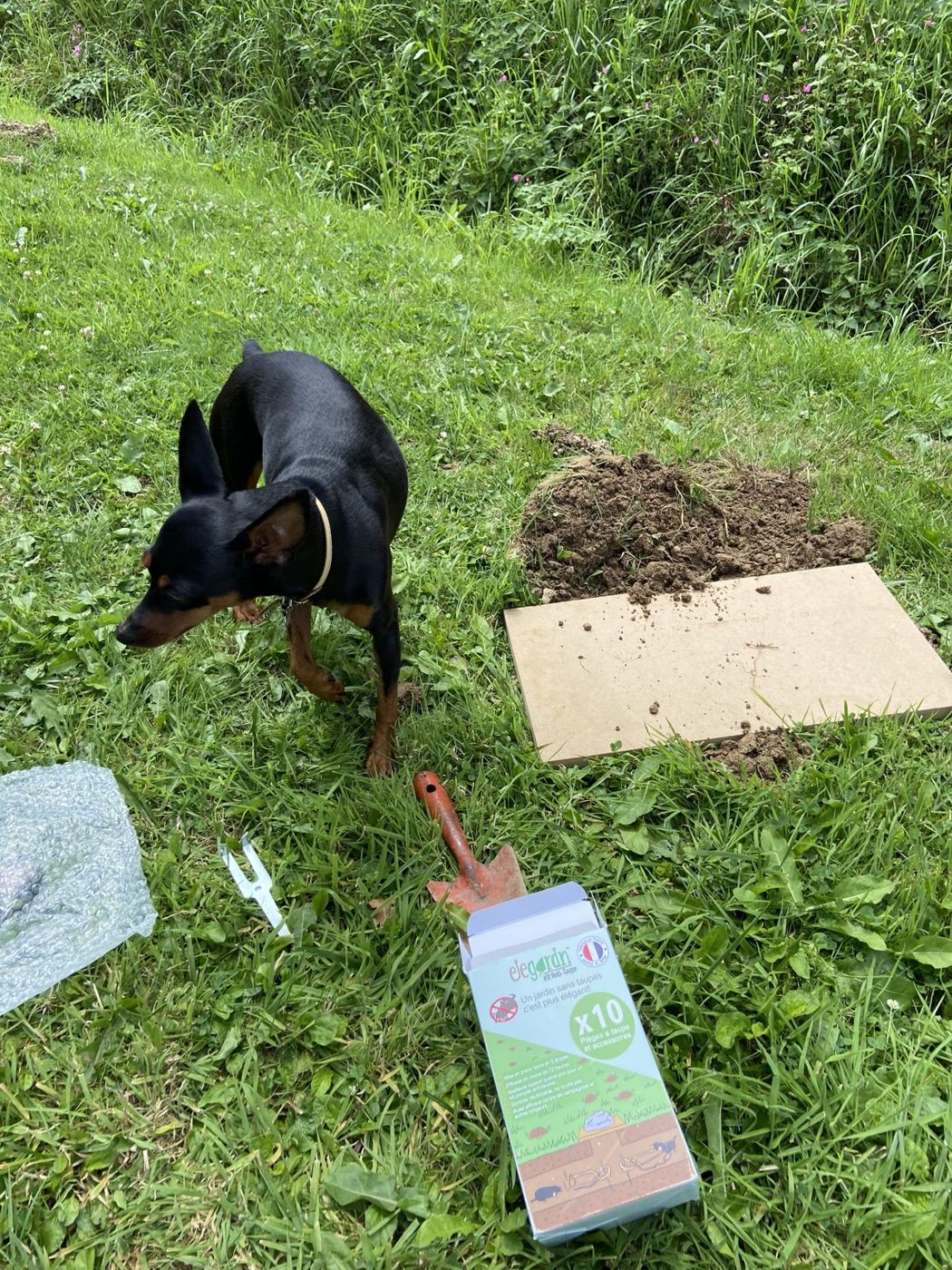
Day 1: finding the right molehills
You don’t set a trap on just any pile of soil. We picked fresh molehills: soil still loose and dark, with no grass growing back on it. An old molehill flattened by rain often sits on an abandoned tunnel, and a trap set there can wait a long time.
On every molehill we chose, the method was the same, exactly the one in our step-by-step setting guide:
- dig a square hole around the mound and remove the soil;
- probe with the metal rod supplied to find the entrance of the two tunnels (a molehill almost always has two);
- clear each tunnel neatly so the trap fits without forcing;
- arm the traps with the kit’s key, then place one at the entrance of each tunnel;
- hold each trap in place with its rod, then cover the hole to put the tunnel back in the dark.
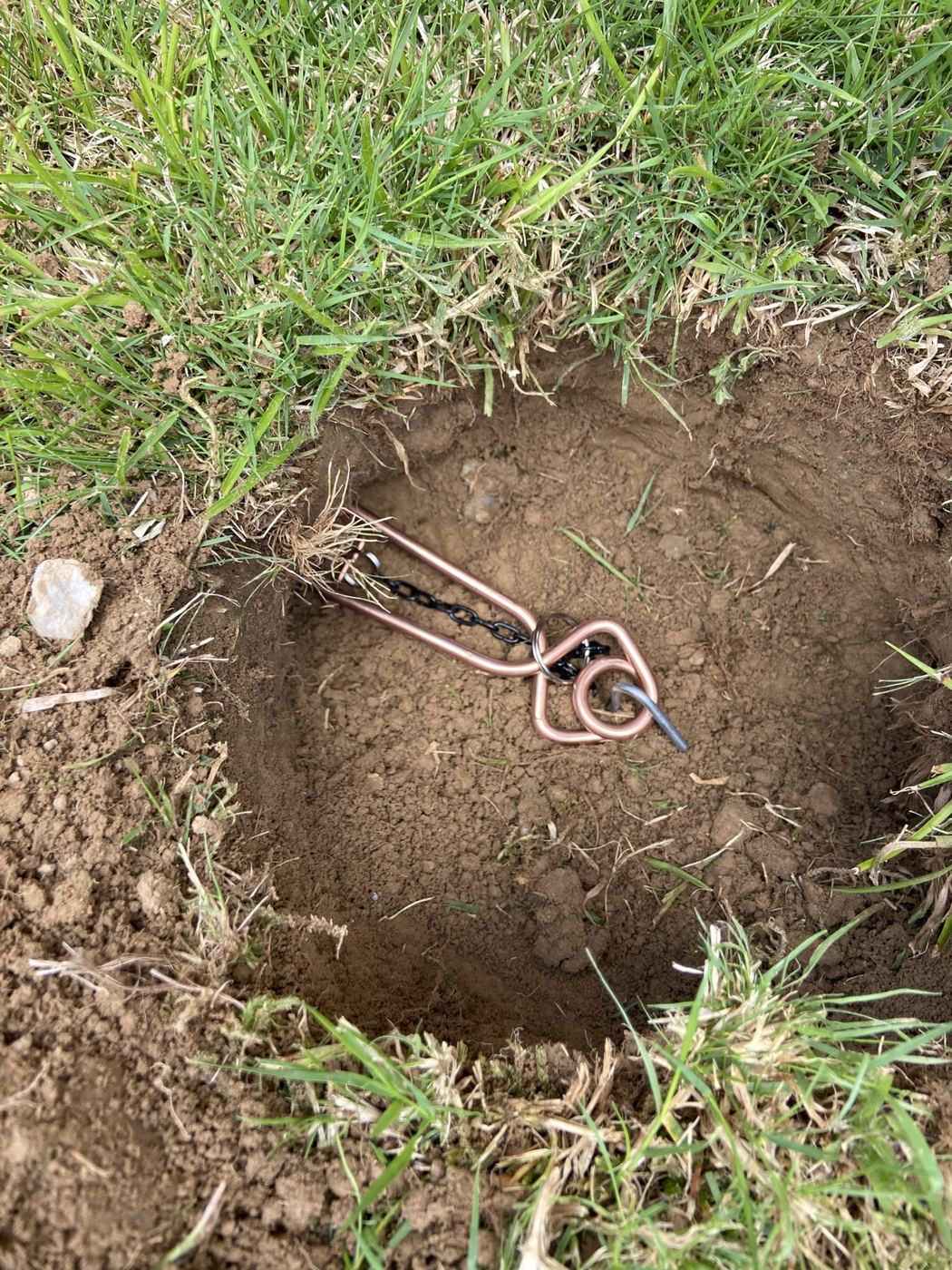
Allow about ten minutes per molehill at first, then much less once you have the knack. Over the afternoon, we set up several molehills spread between the lawn and the bank.
Day 2: the first catches that very morning
The next morning, first round. A trap that has gone off, meaning closed, usually means there is a mole in it. And that was the case from the very first hole we opened.
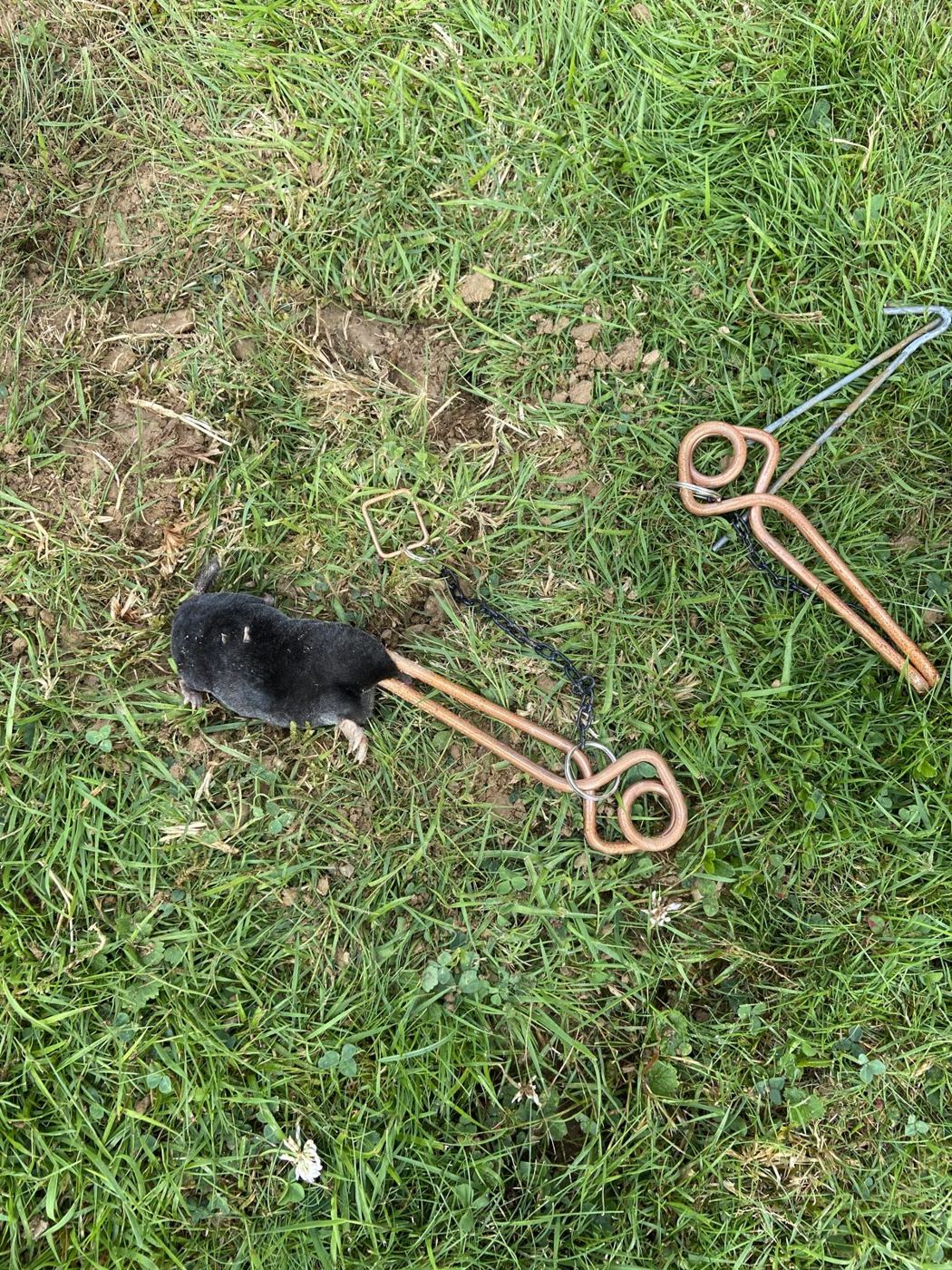
The best demonstration came from a molehill at the far end of the garden. Lifting the board, you can see both traps, one in each tunnel, both closed.
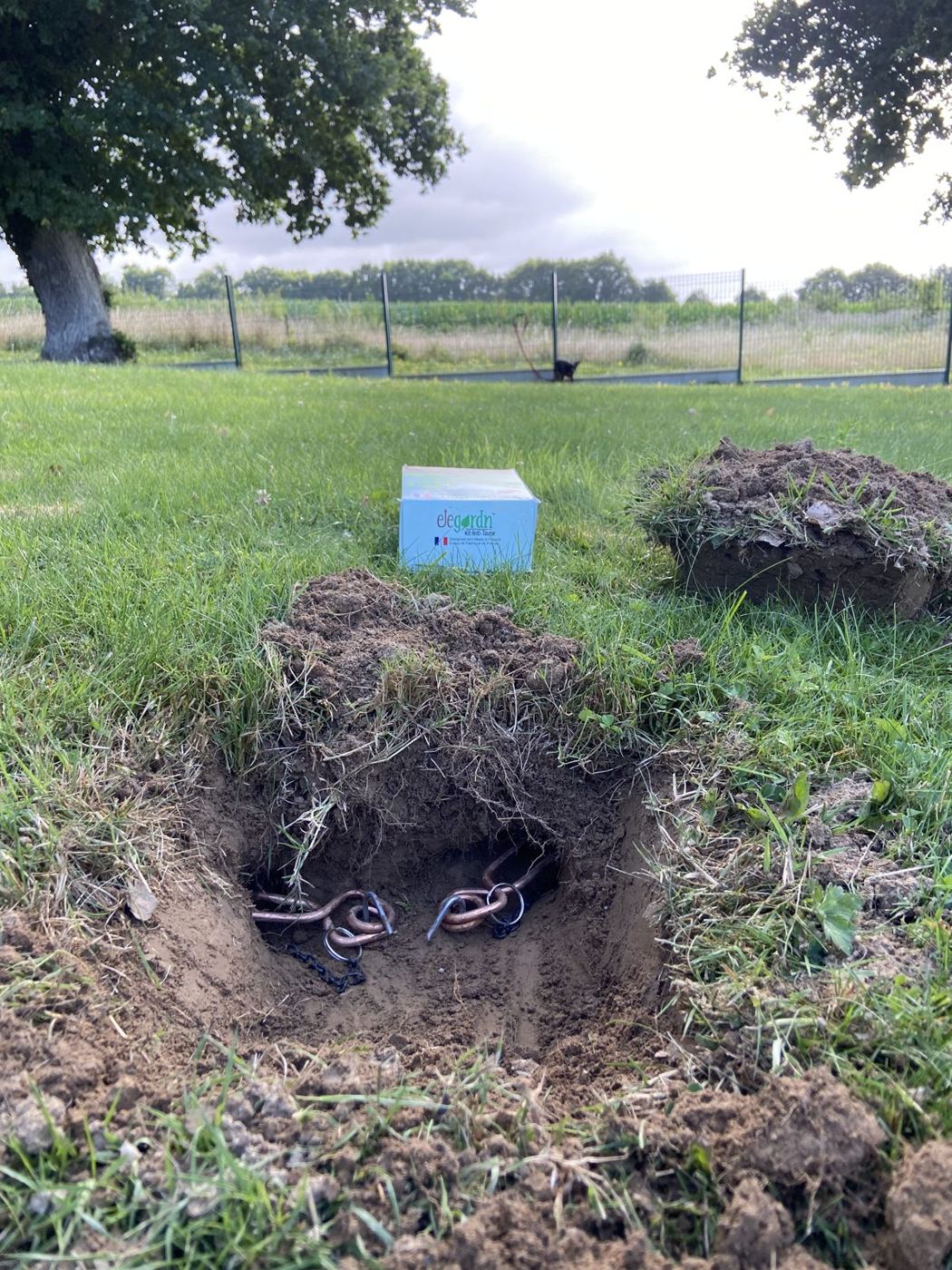
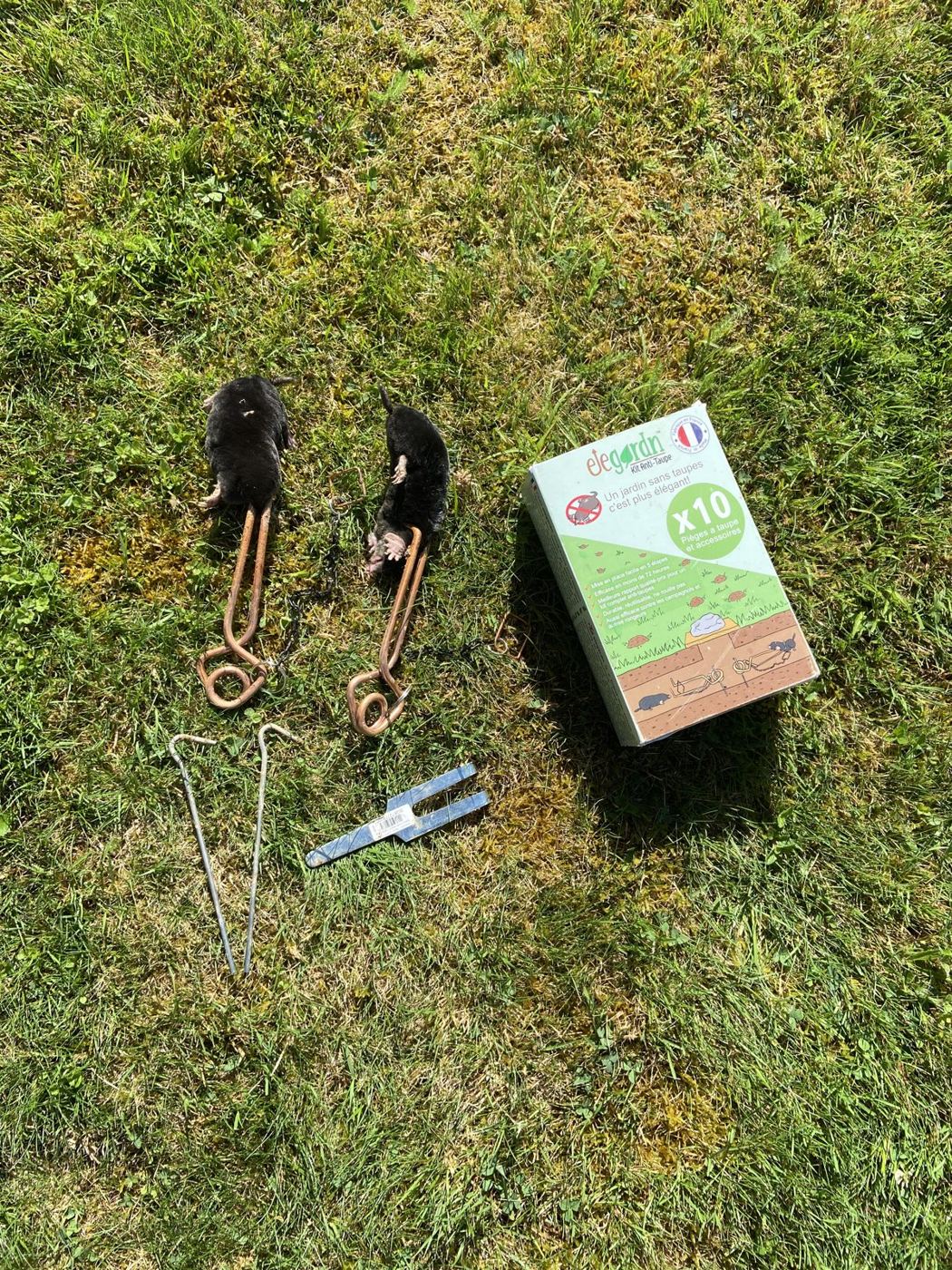
This double catch shows the most important rule of mole trapping: one molehill = two tunnels = two traps. A Putange trap only catches the mole in one direction, and the mole can arrive through either tunnel: by covering both sides, you leave it no way through.
The empty holes were simply closed again and left alone for another 24 hours. There is no point opening them every two hours: each visit lets in light and air, and the mole becomes wary.
Day 3: three more moles
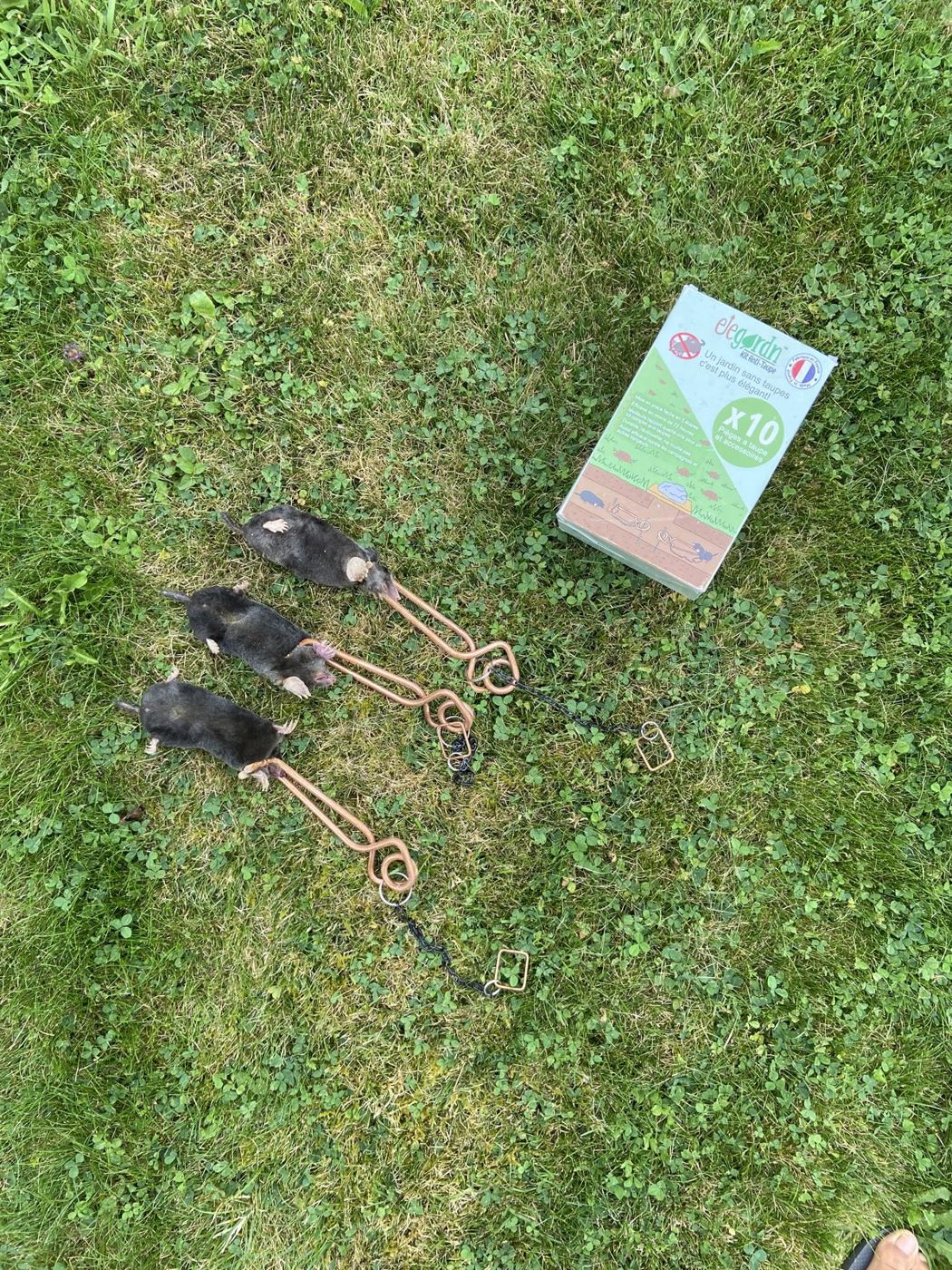
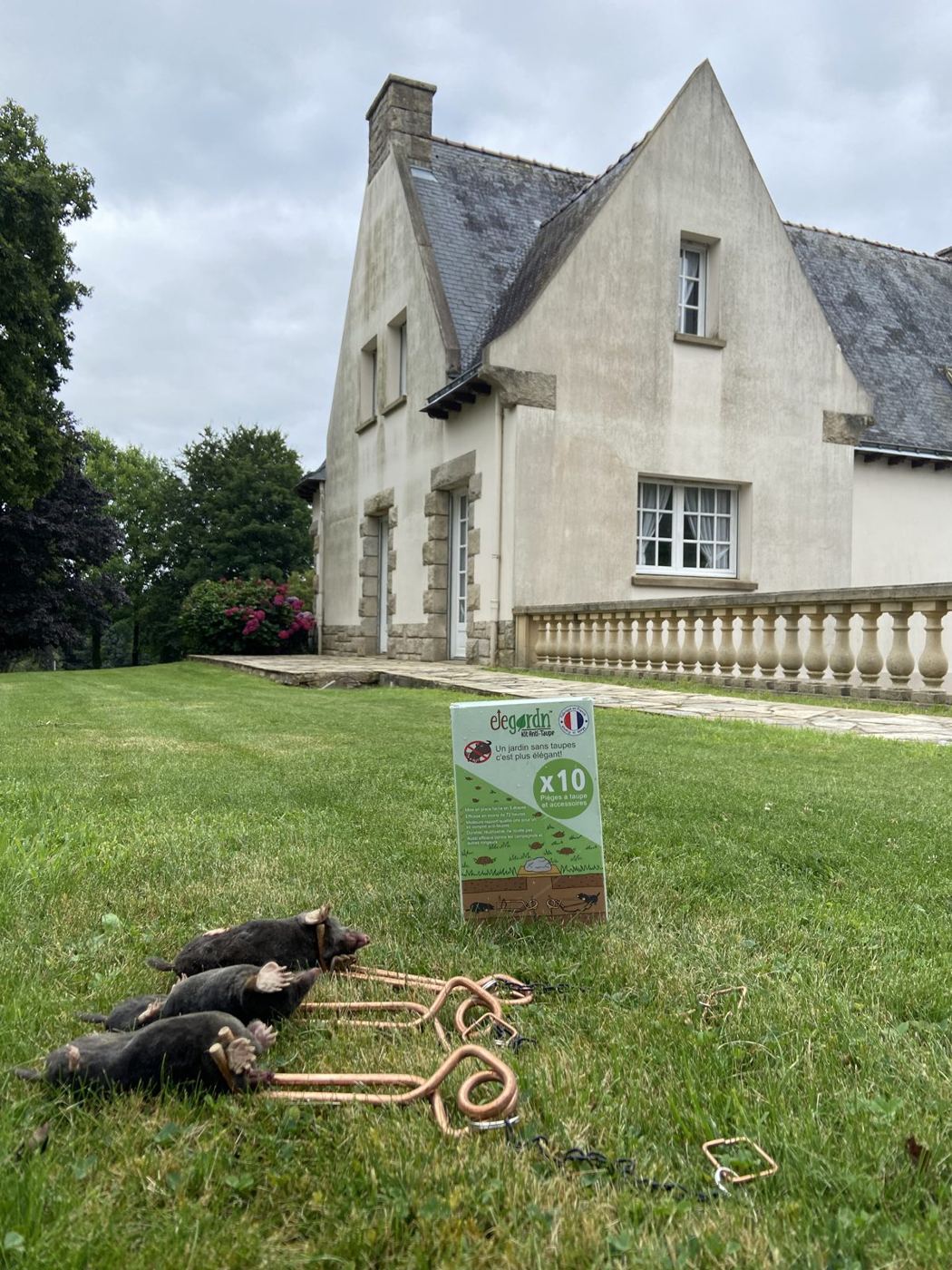
Second round the following morning, on the traps left in place and those reset after the first catches: three new moles.
What this test taught us
The Putange trap is still formidable. Invented in France in the 19th century, it hasn’t aged a day: it goes off as soon as the mole pushes the trigger on its way through the tunnel. No bait needed.
Wire quality matters. Our traps are made in France from 5.5 mm copper-plated steel wire. A trap that is too soft bends the first time you handle it and grips poorly; a rigid trap snaps shut cleanly and keeps its strength year after year.
The chain is not a gimmick. Without it, the trigger gets lost in the soil when you set or retrieve the trap. With it, everything stays together, and you have your full kit ready for the next molehill.
The number of traps makes the difference. With 10 traps, you can cover five molehills at once, on both sides. For a small garden with two or three mounds, the kit of 4 is plenty. For a large plot or an established invasion, go for the kit of 10.
It’s safe for pets. The traps work underground, inside the tunnel, under a board. Our dog followed the whole operation very closely without ever being able to touch them.
Want to do the same at home?
Start with our 8-step setting guide, then have a look at how to assemble and arm a Putange trap if it’s your first time. And to save time, read the mistakes that make mole trapping fail: we made almost all of them before you.